IT OLED Moves from Slideware to Fabs
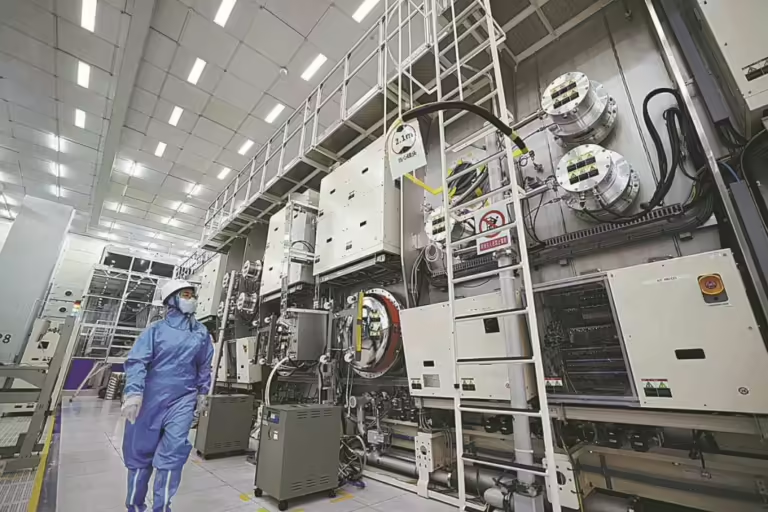
Gen-8.6 production lines in Korea and China now dominate global display equipment spending. The industry has made its capital allocation bet. The open question is how fast IT demand will show up to pay it back.
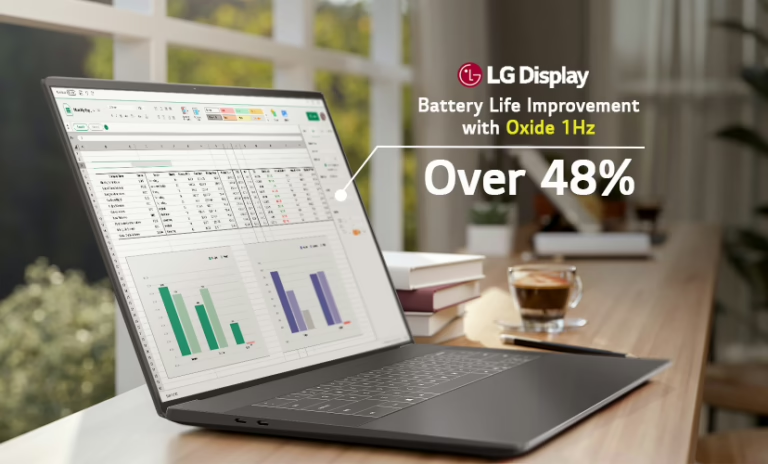

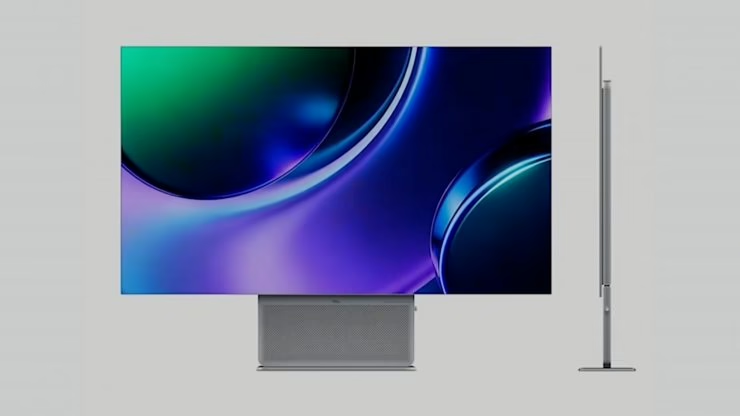
Mass production of the Oxide 1Hz panel has begun, with Dell XPS 14 real-world results posting battery life that exceeds its own tandem OLED sibling by more than eight hours, reshaping the premium laptop display calculus.
A patent suit against China’s Tianma, the first LG Display has ever filed against a Chinese rival, just gained a decisive advantage before a single merits argument has been heard.
A Shenzhen funding round is one data point in a larger story: investment in MicroLED is clustering around microdisplays, optical engines, and photonic interconnects, not living-room TVs.
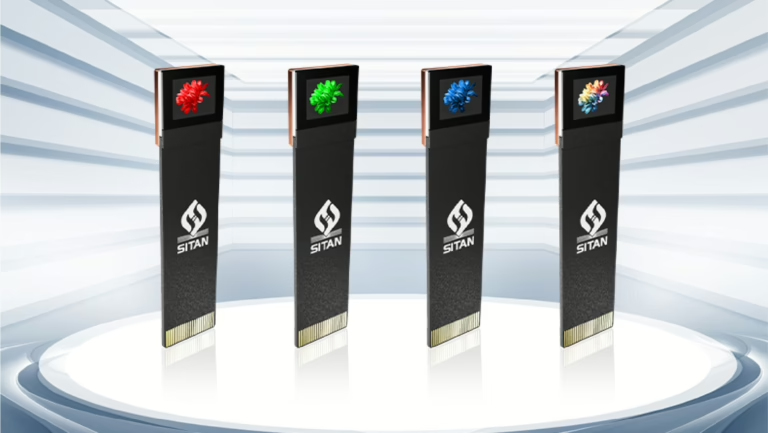
The industry has reached a working three-way segmentation. TFT-LCD handles cost-sensitive VR. Micro-OLED (OLEDoS) dominates premium VR and mixed reality. MicroLED and LCoS paired with waveguides remain the target architecture for true transparent AR, though that category is still largely in the pilot and developer-kit phase.
With lithography-based pixelization and a fourth-generation emissive material now in production, the Chinese panel maker is making the case that OLED’s next challenge is manufacturing architecture, not peak performance.
The clearest trend in the data is price compression at every tier except Apple’s.
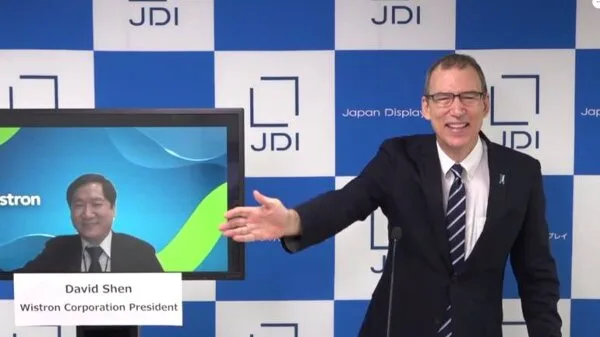
JDI has not confirmed the details publicly, and both the technology choice and business case remain unresolved.
From ground-projection modules to smart mirrors to panoramic cockpit screens, the first months of 2026 have brought a wave of hardware announcements aimed at automotive OEMs and Tier 1 suppliers.
North America remained the largest regional market at 37% of global shipments, but the more notable development was Western Europe surging to 30%, supported by Meta’s new product launches.
The China decline was not a surprise to those who have been tracking the market closely. Government subsidy programs that had pulled forward consumer upgrades throughout 2024 and into early 2025 ran their course, and the resulting hangover was sharp.
By pairing 3,200-nit AMOLED performance with hardware blue-light reduction, nano-matrix anti-glare, and circadian tuning, TCL and panel maker CSOT are betting that ‘healthy OLED’ is the next differentiator in a market Korean suppliers have so far defined around brightness and color volume.