
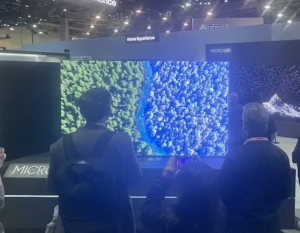
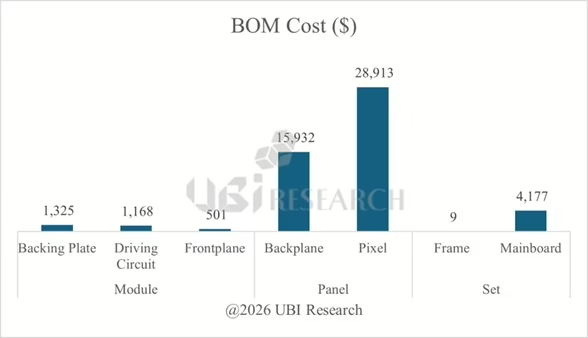
A new cost analysis from UBI Research puts the bill of materials for a 101-inch MicroLED television at approximately $52,000, a figure that underscores both the technology’s promise and the steep manufacturing challenges that still stand between it and the mass market.
The Seoul-based display research firm published a MicroLED TV set BOM analysis report this week, offering what it says is the most detailed cost breakdown yet of the emerging technology. The analysis covers 46 process-material line items and includes yield simulations for the two manufacturing steps that most determine economics at this scale: mass transfer and modular tiling.
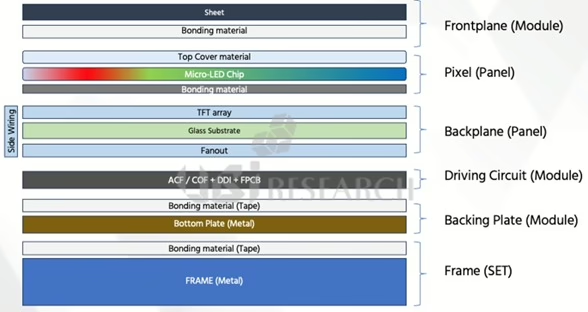
Panel materials, the pixels and associated substrate, dominate the cost structure, accounting for 86.2% of the $52,000 BOM estimate. Module costs represent 5.8% and set-level assembly the remaining 8.0%.
The report’s yield assumptions are grounded in current equipment capabilities and process maturity, which explains why the numbers remain so far above competing technologies. Today’s 100-inch-class ultra-large TV market is served primarily by LCD panels using Micro RGB backlighting, a technology that has driven aggressive price erosion in recent years and put pressure on every alternative.
MicroLED’s structural advantages are not in dispute. Unlike LCD, it requires no backlight unit or color filter, instead using a self-emissive architecture that delivers absolute black performance and, through modular tiling, theoretically unlimited scalability. The question has always been cost, and that question remains open.
Dr. Joohan Kim, senior analyst at UBI Research, framed the path forward in terms familiar to anyone who has watched panel manufacturing economics evolve over the past two decades. “For MicroLED TVs to become mainstream in the large-size premium market, improving process yield and reducing cost through vertical integration will be essential,” he said, adding that Korean manufacturers with existing technological footholds are well positioned to lead that transition.
The report is aimed at panel makers as well as the equipment and materials suppliers whose roadmaps will ultimately determine how quickly, and how far, that $52,000 figure can come down.