
At CES 2026, TCL CSOT isn’t betting on a single hero product. Instead, the panel maker is presenting what amounts to a full technology stack—ultra-zone MiniLED TV panels, XR microdisplays across two competing architectures, sliding automotive OLED, and inkjet-printed mobile screens—all unified under its new APEX branding framework.
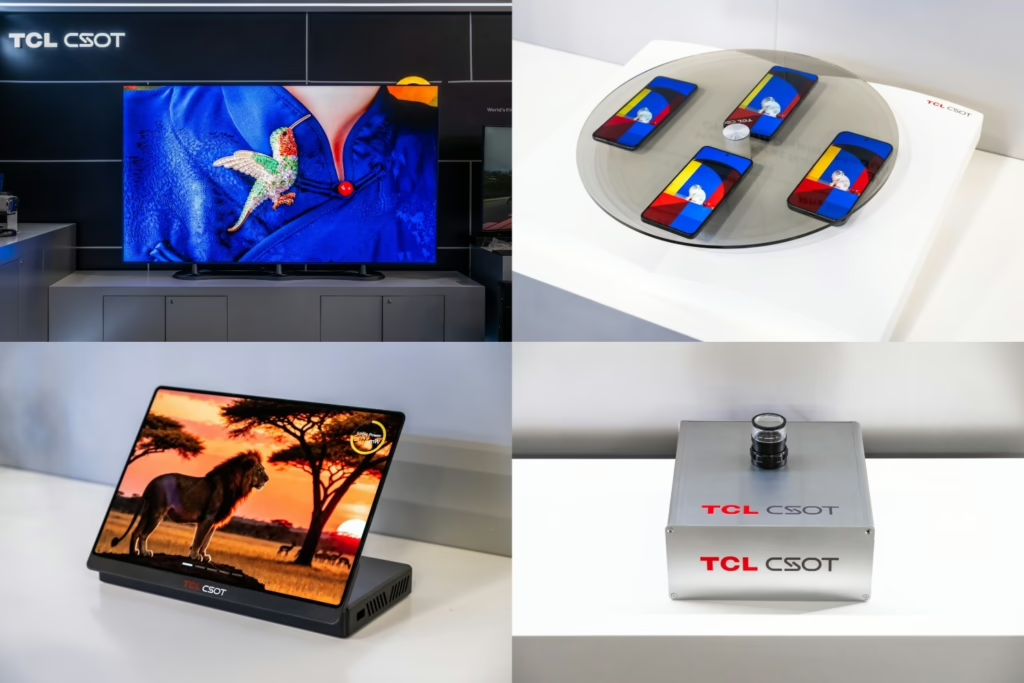
The company’s booth philosophy seems clear: demonstrate manufacturing breadth and signal to OEMs that CSOT can serve as a one-stop shop across consumer, automotive, and extended reality segments.
The TV Story: 18,000 Zones and Counting
The headline panel is a 98-inch HVA (high-vertical-alignment) LCD that CSOT calls the “Ultra Infinity View” display. The near-borderless design uses an advanced RGB backlight with around 18,000 local dimming zones and wide BT.2020 color coverage. A low-reflection, anti-glare surface addresses the perennial challenge of maintaining contrast in bright living rooms.
This HVA technology underpins TCL’s X11L flagship SQD-Mini LED TV, which pushes the zone count even higher—reportedly over 20,000—with peak brightness claims of 10,000 nits. The panel stack includes CSOT’s WHVA 2.0 Ultra technology, a proprietary UltraColor filter, Super Quantum Dots, and a 26-bit backlight controller for fine-grained luminance steps. TCL claims 100% BT.2020 coverage across all content scenarios.
Whether real-world viewing conditions can actually benefit from five-figure zone counts remains an open question, but the spec race in MiniLED backlighting shows no signs of slowing.
XR Microdisplays: Two Paths Forward
CSOT is hedging its bets in the XR space by demonstrating two distinct microdisplay technologies.
The first is a 2.56-inch real RGB G-OLED panel that the company describes as the world’s highest-PPI real RGB OLED for XR applications. Specifications include 1512 PPI, 120Hz refresh, 1,000,000:1 contrast ratio, and microsecond-class response times. The target is clearly premium AR/VR headsets that demand retina-grade visuals with minimal motion blur.
The second approach uses silicon-based Micro LED. A 0.28-inch microdisplay packs 720p resolution (1280 × 720) onto a silicon substrate, achieving 5131 PPI. Self-emissive Micro LED promises extreme brightness and contrast in a form factor small enough for lightweight AR glasses. CSOT is positioning this as the world’s highest-resolution single-chip full-color Si-Micro LED.
Both technologies address the same market need, dense, bright, fast microdisplays for head-mounted devices, but through fundamentally different approaches. The G-OLED path leverages CSOT’s existing OLED manufacturing expertise, while the Si-Micro LED represents a longer-term bet on what many consider the eventual successor technology.
Automotive: Displays That Move
The automotive demonstrations are perhaps the most visually striking. CSOT is showing what it calls the world’s first sliding and multi-curved 28-inch IJP (inkjet-printed) OLED automotive display with a true RGB pixel layout.
The mechanical concept is ambitious: the panel physically slides from approximately 16 inches to 28 inches in width, with a curved form factor rated for over 100,000 sliding operations. Inkjet-printed OLED offers a high luminous area ratio—in the 50-60% range—with automotive-grade brightness and color performance.
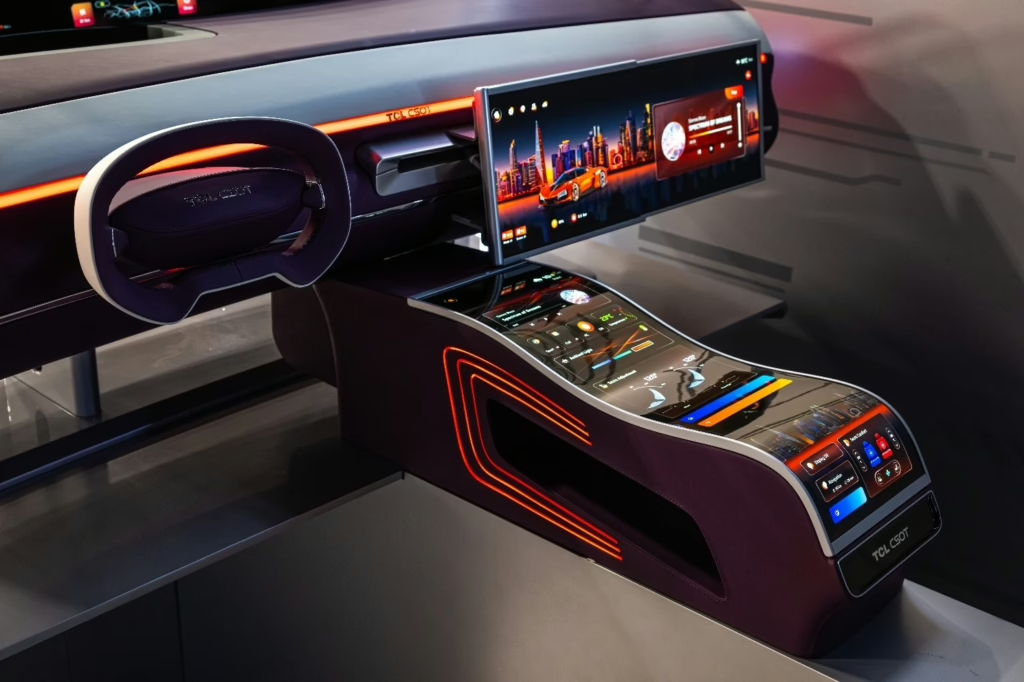
Additional automotive demos include a 13.8-inch passenger display that retracts beneath the dashboard when not in use, a curved instrument cluster with 500R curvature, and a 30-inch rear-seat entertainment panel with a 32:9 aspect ratio, ceiling-mounted for a cinema-style experience.
The sliding display concept addresses a real tension in automotive design: passengers want large screens, but large screens can overwhelm cabin aesthetics and obstruct sightlines. Whether OEMs will embrace the added mechanical complexity remains to be seen.
Mobile: Inkjet Printing Comes to Phones
CSOT is also pushing inkjet-printed OLED into the mobile space with what it describes as the world’s first real stripe RGB IJP OLED mobile display at 5.65 inches. The native resolution hits 390 PPI, though CSOT claims a diamond-like subpixel arrangement delivers perceived sharpness equivalent to 490 PPI.
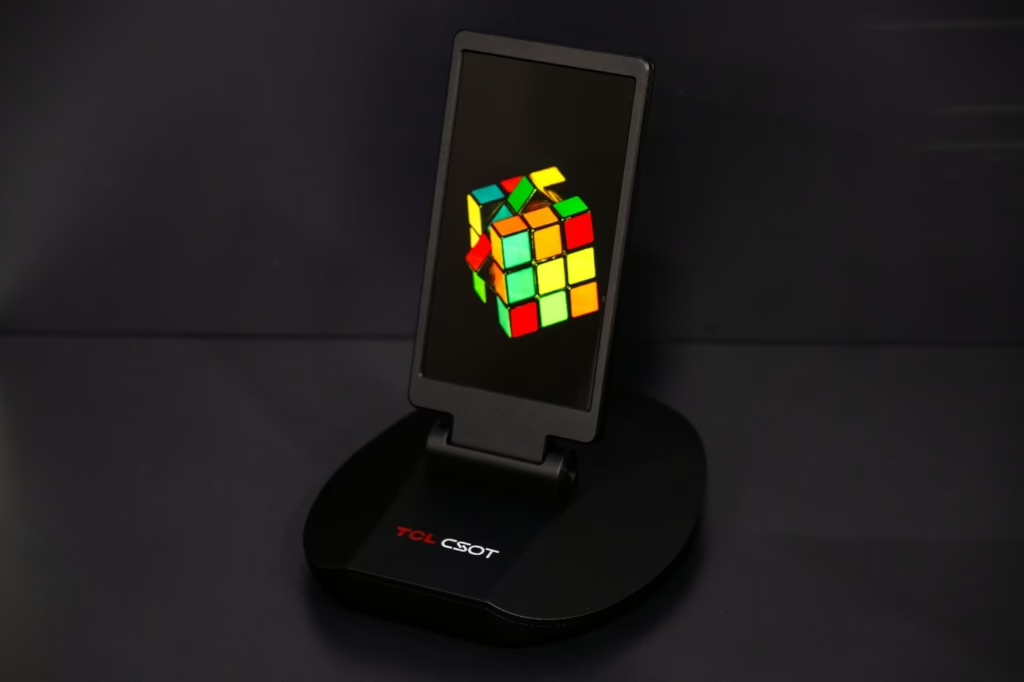
The inkjet printing approach promises reduced material waste and more flexible manufacturing scaling compared to traditional OLED deposition methods. If the technology proves out at volume, it could reshape the cost structure for mid-range and premium smartphone displays.
The APEX Framework
CSOT has wrapped its CES 2026 portfolio under the APEX banner—Amazing Display Experience, Protective of Eye Health, Eco-friendly to Build and Use, and X-Unlimited Imaginative Potential. The branding emphasizes eye comfort features including low blue light emission, low reflection, flicker-free operation, and natural light tuning.
The “AI + Display” positioning connects panel technology to TCL’s TV-side processing capabilities, where TSR AI processors work with high-zone backlights to handle color, contrast, motion compensation, upscaling, and audio optimization as an integrated system.
Whether the APEX branding resonates beyond the trade show floor will depend on whether CSOT can translate manufacturing demonstrations into actual design wins. The technology portfolio is certainly comprehensive—the question now is execution.